 P6 Technologies Capital
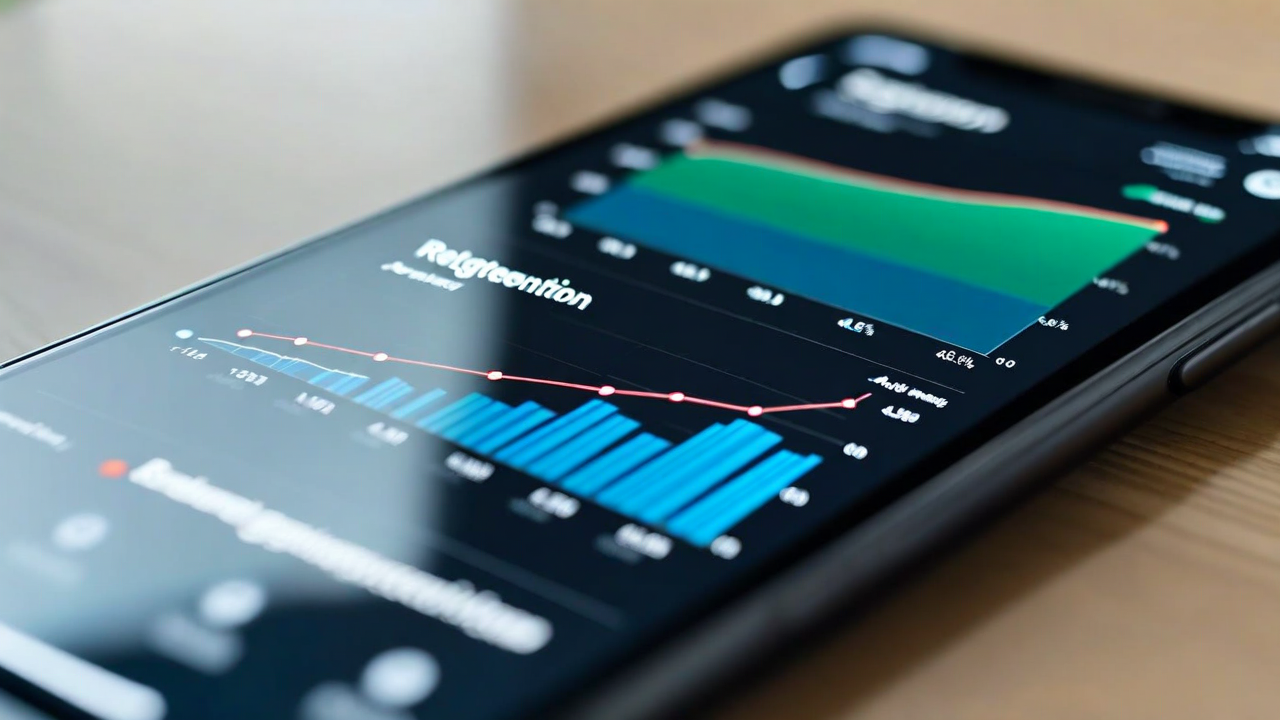
The growth playbook that defined the first decade of the consumer app economy — spend aggressively on paid acquisition, grow the install base, and worry about retention later — has reached its limits. As user acquisition costs have risen across every major digital platform and as app store competition has intensified to the point where the average consumer downloads fewer than one new app per month, the most sophisticated consumer technology companies have pivoted their primary growth metric from downloads and new user activation to retention: the percentage of activated users who continue to use the product over time.
This shift is not merely tactical. It reflects a structural change in the consumer app economy — one with profound implications for how the best consumer technology companies are built, funded, and valued. At P6 Technologies Capital, we have tracked this shift closely across our portfolio and our investment pipeline, and we believe understanding retention dynamics is now a prerequisite for any meaningful evaluation of a consumer app business at the seed stage.
Why Acquisition-Led Growth Has Run Its Course
The economics of paid user acquisition in consumer apps have deteriorated dramatically over the past five years. Apple's App Tracking Transparency (ATT) framework, introduced in 2021, fundamentally disrupted the targeting capabilities of mobile advertising platforms, reducing the efficiency of paid acquisition campaigns by an estimated 30 to 50 percent for many consumer app categories. Meanwhile, competition for the most valuable consumer app install categories — social, fintech, e-commerce, entertainment — has intensified as both incumbents and well-funded challengers compete for the same audience segments.
The result is that cost per install (CPI) across most major consumer app categories has roughly doubled over a five-year period, while the quality of installs driven by paid acquisition has generally declined. Users acquired through paid channels tend to have lower activation rates, lower retention rates, and lower lifetime values than users acquired through organic channels — word of mouth, platform virality, or direct search. The compounding math of paid acquisition has always been challenging; the deteriorating efficiency of paid channels has made it untenable for most consumer app businesses as a primary growth strategy.
The more fundamental problem with acquisition-led growth is its failure to create compounding value. A business that acquires one million users but retains only 10 percent of them at 30 days is not worth significantly more than a business that acquires 100,000 users and retains 60 percent of them at 30 days — and in most cases, the latter business is worth considerably more, because its unit economics are sustainable, its word-of-mouth flywheel is accelerating, and its engaged user base is creating the social proof and network density that will drive organic growth over time.
The Retention Curve and What It Reveals
Every consumer app has a retention curve — a visualization of what percentage of users from a given acquisition cohort are still active on the platform at various points in time after download or activation. The shape of this curve is one of the most revealing single charts in consumer technology evaluation.
Most consumer apps exhibit what analysts call an "L-shaped" retention curve: a sharp decline in the first 7 to 14 days post-install, followed by a gradual decline through day 30, and then a slow tail toward near-zero by day 90 or 180. This curve profile — nearly ubiquitous among average consumer apps — indicates that the product is not generating sustained habitual usage. Users try it, don't find sufficient value to return repeatedly, and quietly stop using it.
The best consumer apps exhibit a fundamentally different curve shape: an "L" that stabilizes into a near-horizontal line at some non-trivial level. This "smile curve" pattern — a sharp early drop-off that flattens into a stable long-term retention plateau — indicates that the product has a core group of highly engaged habitual users who have incorporated it into their daily or weekly routine. The height of this plateau and the stability of it over time are the two most critical variables in assessing the long-term value of a consumer app business.
What determines whether a consumer app achieves a smile curve rather than a pure L-curve? The evidence points to three core variables. First, the depth of the core value proposition: apps that solve a specific, recurring problem deliver ongoing value that pulls users back repeatedly, while apps that deliver a one-time or occasional value proposition struggle to generate habitual usage. Second, the quality of the habit loop: apps that successfully create trigger-routine-reward cycles within the user experience generate internal compulsion to return, rather than relying on external push notifications or paid re-engagement. Third, the social and network dimensions of the experience: apps where the experience improves as the user's social graph on the platform grows create social pull that reinforces retention independent of the core product value.
Building for Retention: The Product Architecture of Sticky Apps
The most retention-effective consumer apps share a set of product architecture principles that distinguish them from apps that generate strong initial downloads but poor long-term engagement. Understanding these principles is essential for founders building consumer technology at the seed stage — and for investors evaluating the long-term potential of consumer app investments.
The first principle is progressive value delivery. The best consumer apps don't deliver their full value proposition on day one. They are designed so that the experience improves meaningfully as the user invests more time, builds more history, or expands their usage to more features. This progressive value disclosure creates a powerful retention mechanism: users who have already invested time and behavior into the product are reluctant to abandon it, because doing so means losing the accumulated value that the product has built around their specific usage history and preferences.
The second principle is notification architecture. Push notifications are the single most powerful and most abused retention tool in the consumer app stack. Apps that deploy notifications thoughtfully — using them only to deliver information the user genuinely wants, in a format and frequency that matches user preferences — can significantly extend the active usage window beyond what organic return rates would otherwise support. Apps that use notifications primarily for re-engagement of churned users or for promotional purposes train users to ignore or disable them, permanently reducing the notification channel's effectiveness.
The third principle is social graph investment. For consumer apps with any social dimension — which in 2025 includes a majority of the most valuable consumer technology categories — the depth and quality of a user's in-app social connections is one of the strongest predictors of long-term retention. Users with five or more meaningful in-app connections (friends, follows, favorites) retain at dramatically higher rates than users with zero or one connection. Product teams that invest in social graph building — through contacts import, suggested connections, community discovery features — are directly investing in retention.
The fourth principle is cross-platform continuity. In an era of multi-device, multi-platform usage, consumer apps that provide seamless continuity across mobile, tablet, desktop, and emerging form factors (wearables, smart home devices) remove the friction of context-switching that causes abandonment. The best consumer apps treat the user's session as persistent and contextual rather than device-bound, maintaining state, preferences, and progress across every access point.
Measuring Retention: Beyond Day 30
The standard mobile app industry retention metric — Day 1, Day 7, Day 30 retention — captures only a fragment of the retention picture that matters for long-term consumer app valuation. At P6, we evaluate a more comprehensive set of retention metrics when assessing consumer app investments.
L30 (30-day active rate) measures the percentage of a cohort that was active at any point in a 30-day window, as distinct from "was active on exactly day 30." This metric better captures habitual but not daily users, who are often among the highest-value cohorts for monetization purposes.
Session frequency and duration trends — tracked over cohort age rather than absolute time — reveal whether users who stay engaged are deepening their engagement over time or maintaining flat usage. Deepening engagement is a strong signal of expanding product value; flat engagement suggests the app has found its natural usage ceiling.
Feature adoption breadth measures the percentage of retained users who have adopted multiple features of the product versus those who use only a single feature. Users with broader feature adoption have higher switching costs and retain at higher rates, because the cost of leaving includes abandoning multiple value streams rather than just one.
Churn recovery rate — the percentage of churned users who reactivate within a defined window after a re-engagement campaign or organic trigger — reveals the depth of latent value the product has created for users who have temporarily lapsed. High churn recovery rates indicate that the product created genuine value that users remember and are motivated to return to; low recovery rates suggest the product failed to create lasting impression despite initial usage.
The Retention-Revenue Connection
Beyond its impact on organic growth and user base quality, retention is also the primary determinant of consumer app monetization efficiency. Consumer apps monetize through three primary mechanisms — subscription revenue, in-app purchases, and advertising — and all three are deeply dependent on retention quality.
Subscription conversion rates are dramatically higher among users with established retention patterns than among newly activated users. Apps that push subscription conversion too early in the user lifecycle — before the user has experienced sufficient value to justify a recurring payment — consistently achieve lower conversion rates and higher subscription cancellation rates than apps that wait for users to reach an engagement threshold that predicts conversion success.
In-app purchase frequency and average order value are both positively correlated with session frequency and session depth — both of which are retention metrics. Users who engage with a consumer app daily spend significantly more on in-app purchases over their lifetime than weekly users, who in turn outspend monthly users by multiples.
Advertising revenue in consumer apps is a direct function of session time and session frequency — the inventory available to sell to advertisers is a product of how often users show up and how long they stay. Apps with poor retention generate insufficient advertising inventory to build sustainable ad-supported business models regardless of their total user count.
What This Means for Seed-Stage Consumer App Investing
At P6 Technologies Capital, the shift from acquisition-led to retention-led consumer app growth has materially changed how we evaluate consumer technology investments at the seed stage. We now prioritize three retention-oriented signals above almost all others in our early-stage evaluation framework.
First, we look for early evidence of cohort stability. Even with small user bases, the best seed-stage consumer apps show retention curves that are stabilizing rather than continuing to decline. We want to see evidence — even at the 30 to 90 day level — that a meaningful percentage of activated users are maintaining usage habits.
Second, we look for founders with a retention-first product philosophy. The best consumer app founders at the seed stage are already thinking about retention architecture, habit loop design, and long-term engagement mechanics — not just user acquisition and growth hacking. The product sensibility that produces exceptional retention outcomes is evident in the earliest design decisions, and it is a leading indicator of the product quality that will ultimately determine the company's trajectory.
Third, we look for natural usage frequency alignment with the value proposition. The most retentive consumer apps are those where the natural frequency of the user's need matches the frequency that would make the app habit-forming. Daily-need apps — messaging, news, fitness tracking — have the clearest path to habit formation. Apps addressing weekly or monthly needs face a more challenging retention engineering problem that requires deliberate design to solve. Understanding this alignment is foundational to evaluating the realistic ceiling for a consumer app's retention metrics over time.
Key Takeaways
- Rising user acquisition costs have made acquisition-led growth unsustainable for most consumer apps.
- The "smile curve" retention profile — sharp early drop-off stabilizing into a long-term plateau — distinguishes the best consumer apps from the rest.
- Progressive value delivery, thoughtful notification design, and social graph investment are the primary levers for improving retention.
- Day 30 retention is a starting point, not an endpoint — L30, session frequency trends, and churn recovery rate reveal far more about long-term health.
- Retention is the primary determinant of subscription conversion, in-app purchase frequency, and advertising inventory value.
- At the seed stage, early cohort stability and a retention-first product philosophy are the strongest signals of future consumer app success.